
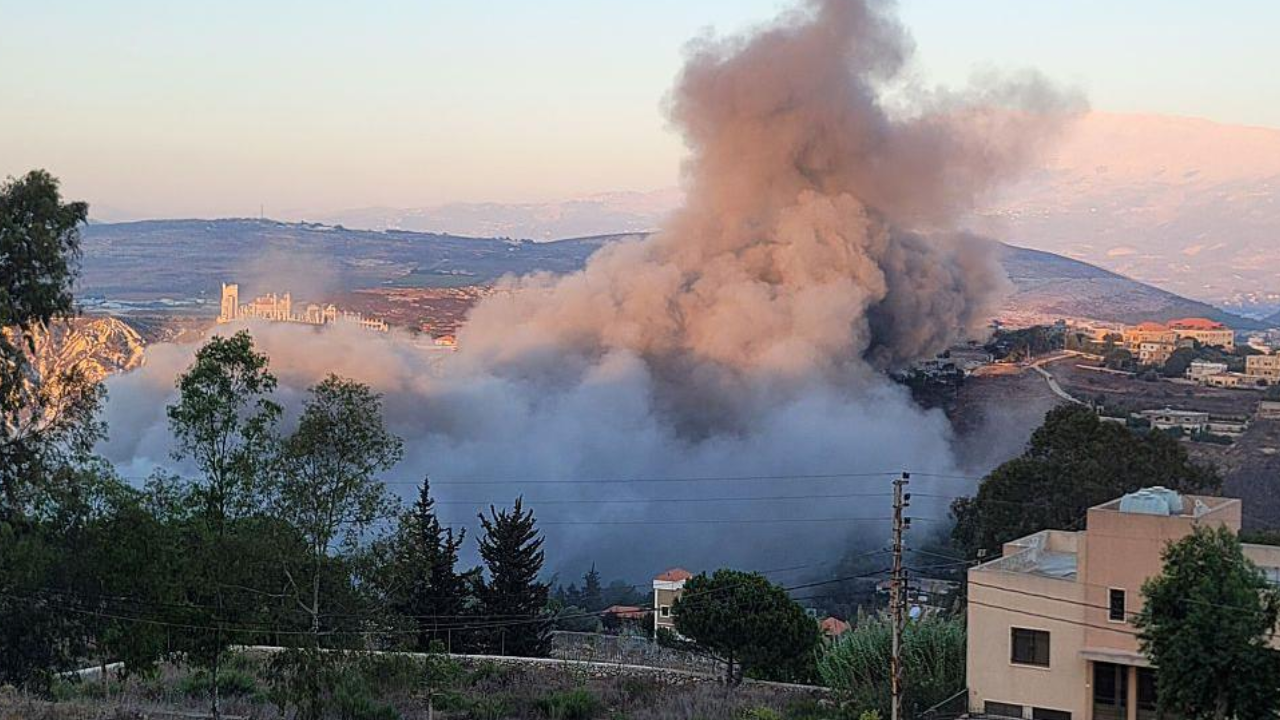
Israeli aircraft targeted areas in southern Lebanon on Thursday, following a rare in-person meeting between Israeli and Lebanese officials the previous day.
The airstrikes focused on locations that the Israeli military alleged were used by Hezbollah for weapon storage.
Residents living in Mjadel, Baraachit, Jbaa, and Mahrouna received orders to evacuate areas close to what Israel identified as storage sites associated with Hezbollah. The Israeli military stated that these locations breached the existing ceasefire agreement and affirmed that operations would persist “to eliminate any threat.” There was no immediate reaction from Lebanese authorities.
The airstrikes came about after Israel accused Hezbollah of reestablishing its positions near the border. Israeli officials have contended that Lebanese authorities failed to enforce the stipulations of the ceasefire agreement, which includes limiting Hezbollah’s presence south of the Litani River.
The agreement, brokered by the US and France, required Israel to withdraw its forces from the southern region while Hezbollah was to relocate its fighters and weapons north of the river. Hezbollah and its allies have resisted this aspect of the agreement.
Israel has kept several forward positions and ramped up air operations in recent weeks. Following the ceasefire that began in November 2024, which ended over a year of conflict, cross-border hostilities had decreased; however, near-daily strikes resumed as allegations regarding Hezbollah’s activities intensified.
The airstrikes on Thursday occurred shortly after representatives from both sides met in Naqoura. This discussion took place at the headquarters of the UN peacekeeping force Unifil during a session of the ceasefire monitoring committee, which had previously included only military representatives from the US, France, Lebanon, Israel, and Unifil. This marked the first time civilian representatives from Israel and Lebanon participated.
A statement from Israeli Prime Minister Benjamin Netanyahu’s office indicated that the talks “occurred in a positive atmosphere” and that both sides intended to formulate proposals for potential economic collaboration.
Additionally, the statement emphasized Israel’s stance that Hezbollah’s disarmament was a prerequisite.
Lebanese Prime Minister Nawaf Salam said in a press conference that Lebanon is still “far” from achieving any political normalization with Israel. He mentioned that the main aim of the Naqoura meeting was to ease tensions rather than to discuss a larger agreement.
Salam outlined Lebanon’s priorities as putting an end to hostilities, securing the release of Lebanese prisoners held by Israel, and ensuring the withdrawal of Israeli forces from Lebanese land. He also expressed Lebanon’s willingness to allow the deployment of American and French forces to assist in verifying measures aimed at disarming Hezbollah.
Currently, a UN Security Council delegation is present in Lebanon to assess advancements concerning the ceasefire.